

In the competitive beverage industry, the speed and reliability of your production line can define your success. Automatic water-filling machines have become indispensable tools in modern facilities, transforming how we package liquids. As demand for bottled water grows, relying on manual processes is no longer sustainable. Liquid filling systems offer the precision and speed needed to stay ahead. This blog explores bottled water automation, covering the tangible benefits, various machine types, and future trends shaping this technology. Whether you are a small startup or a large manufacturer, understanding these advantages is the first step toward optimizing your operations.
What is an Automatic Water Filling Machine?
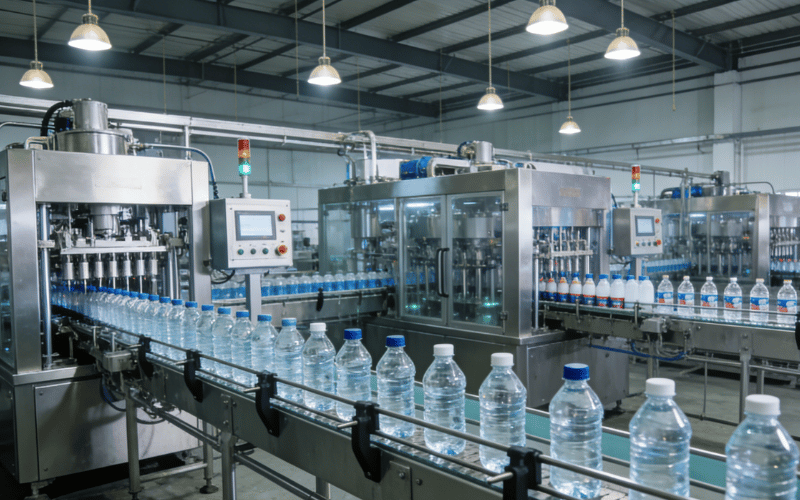
An automatic water filling machine is a sophisticated piece of equipment designed to fill containers with liquid without human intervention. These machines are the heart of automated bottling systems, engineered to handle high-speed production runs with incredible accuracy. By mechanically controlling the flow and volume, water filling machines ensure that every bottle receives the same amount of product. They eliminate the variability of manual filling, ensuring that your bottling process is fast, consistent, and scalable enough to meet modern consumer demands.
Types of Automatic Filling Machines
Selecting the right equipment depends on your specific product needs. There are several types of filling machines available, each suited for different applications:
- Gravity Fillers: These use the force of gravity to fill bottles to a consistent level. They are simple, cost-effective liquid-filling solutions ideal for thin, free-flowing liquids such as water.
- Piston Fillers: Using a piston-and-cylinder mechanism, these machines measure precise volumes. They are excellent for thicker liquids but can also handle water with high accuracy.
- Volumetric Fillers: These dispense liquids to a pre-set volume, ensuring that every container has the same amount, regardless of bottle shape variations.
- Pump Fillers: These use various pumps (gear, lobe, etc.) to move liquid, offering versatility for different viscosities.
Overview of Liquid Filling Systems
Liquid filling systems are more than just the filler itself; they are comprehensive setups that manage the entire liquid journey. The process typically starts with product storage tanks, then moves through sterilization units, and finally reaches the filling nozzles. Automated filling processes seamlessly synchronize these steps. Sensors detect the presence of a bottle, ensuring nozzles open only when a container is in place. Once filled, the system immediately transfers bottles to capping and labeling stations. This integrated approach minimizes spillage, reduces exposure to contaminants, and ensures a smooth, efficient transition from empty bottle to sealed product.
Benefits of Using Automatic Liquid Filling Machines
The shift to automation in liquid filling is more than just a technological upgrade—it’s a strategic move that transforms production efficiency, cost management, and product quality. By replacing manual processes with automated systems, businesses can unlock a host of benefits that drive growth and competitiveness. Let’s explore the specific advantages of using automatic liquid filling machines and how they revolutionize modern manufacturing.
Increase Efficiency and Productivity
The primary advantage of upgrading to automation is the dramatic boost in operational capability—efficiency in bottling skyrockets when machines take over repetitive tasks. Automated systems run continuously without fatigue, breaks, or shift changes, significantly increasing daily throughput. By streamlining workflows and minimizing downtime from manual handling, automation increases productivity and enables businesses to fulfill larger orders faster. This reliable speed ensures that production targets are consistently met, maximizing your facility’s output.
Reduce Labor Costs
Investing in automation is a strategic financial move. While the upfront cost exists, the long-term savings are substantial. Cost-effective filling solutions reduce the dependency on a large manual workforce. Instead of employing multiple workers to fill, cap, and move bottles, a single operator can oversee an entire automated line. This leads to significant labor savings, allowing you to reallocate human resources to more critical tasks, such as quality assurance or machine maintenance, thereby optimizing your overall operational budget.
Ensure Product Quality and Consistency
In the beverage market, consistency is key to brand reputation. Manual filling often leads to uneven liquid levels, which can look unprofessional and result in product giveaway. Quality control in bottling is built into automated machines. They dispense precise volumes every single time, ensuring consistent production across thousands of units. This precision reduces product waste caused by overfilling and prevents customer complaints related to underfilled bottles, maintaining a high standard for your brand.
Scalability and High-Volume Production
As your business grows, your production capabilities must keep pace. Scalable bottling solutions are designed to grow with you. Automatic machines can easily handle high-volume production, filling hundreds or even thousands of bottles per minute. Many systems are modular, allowing you to add more filling heads or upgrade components as demand increases. This scalability ensures you don’t hit a production ceiling, enabling you to expand your market reach without replacing your entire infrastructure.
Adapting to Market Demand
The beverage market is dynamic, with trends shifting rapidly. Flexible production is essential for survival. Automation allows manufacturers to switch between different bottle sizes or liquid types with minimal downtime. Market adaptability means you can quickly pivot to meet seasonal spikes, such as increased water demand in summer, or launch new product lines efficiently. Modern machines feature programmable settings that make changeovers fast and simple, keeping you agile in a competitive landscape.
Boost Production Capabilities
Integrated bottling systems do more than fill; they elevate your entire manufacturing capability. Automatic fillers are designed to work in perfect harmony with upstream and downstream equipment. They synchronize with bottle rinsers, capping machines, and labelers to create a cohesive, high-speed line. This integration removes bottlenecks that often occur in semi-automatic or manual setups. The result is enhanced production, with the liquid flowing smoothly from the tank to the final packaged case. This seamless connectivity allows for real-time monitoring and adjustments, ensuring the entire line operates at peak performance.
Benefits of Automatic Bottle Water Filling Machines
In the bottled water industry, maintaining hygiene and safety is paramount to delivering a product that consumers trust. Automation plays a crucial role in upholding these standards, offering solutions that minimize contamination risks while ensuring compliance with strict regulations. Let’s delve into how automatic bottle-filling machines prioritize hygiene and safety, setting a new benchmark for production quality.
Hygiene and Safety Considerations
When dealing with consumables like water, hygiene is non-negotiable. Hygienic bottling systems are critical for preventing contamination and ensuring public health. Manual interaction with the product or bottles significantly increases the risk of introducing bacteria or foreign particles. Safety in water filling is best achieved through automation, which creates a closed loop that minimizes the liquid’s exposure to the environment. This isolation protects the integrity of the water, ensuring it remains pure and safe for consumption from the source to the sealed bottle.
Maintaining Hygiene Standards
Automatic machines are engineered with sanitation in mind. To ensure hygiene compliance, modern equipment is often constructed from high-grade stainless steel that resists corrosion and bacterial buildup. Many feature integrated CIP (Clean-in-Place) systems, which circulate cleaning and sanitizing solutions through the internal pipes and nozzles without disassembly. These sanitary filling machines ensure that every production run starts in a sterile environment, effortlessly meeting strict food safety regulations.
Automation for Safety Compliance
Regulatory bodies impose strict guidelines on bottled water production. Automated safety features help manufacturers adhere to these rules without constant manual oversight. Sensors monitor fill levels, cap integrity, and even water quality parameters in real-time. Safety compliance in bottling becomes inherent to the process, as the machine can automatically reject bottles that don’t meet standards or shut down if a critical error occurs. This automated vigilance reduces the risk of recalls and protects your brand from liability.
Advantages of Using Automated Systems for Hygiene
The specific hygienic automation benefits are vast and impactful:
- Reduced Human Contact: Eliminates the primary source of biological contamination.
- Easy Cleaning: smooth surfaces and CIP systems make sanitization quick and effective.
- Contamination Prevention: Enclosed filling zones protect open bottles from airborne particulates.
- Consistent Standards: Automated cleaning cycles ensure sanitation is never skipped or rushed.
Frequently Asked Questions
What are the main advantages of automatic filling machines in high-volume operations?
Automatic machines offer faster, high-speed filling that can fill hundreds or even thousands of bottles per hour, boost production efficiency, and minimize human error. They provide consistent product quality and accurate filling, ensuring each bottle is filled to the correct level and that fill levels are consistent across product lines. These filling machines offer reduced downtime, streamlined filling process, and more efficient use of materials compared with manual filling processes.
How does an automatic filler improve production efficiency on a beverage production line?
An automatic filler integrates with the production line to streamline the filling process, allowing businesses looking to scale to fill hundreds or even thousands of bottles per hour. Equipped with advanced filling technology and machinery, automatic systems optimize throughput, reduce cycle times, and accommodate various bottle sizes and shapes to keep product lines moving and boost overall production efficiency.
Why should a beverage industry business use an automatic liquid filling machine rather than manual filling?
Manual filling is labor-intensive and prone to human error, while automatic filling machines are designed to reduce the risk of inconsistencies and contamination. The automatic systems maintain consistent fill levels, accurate filling, and repeatable performance across different bottle sizes, allowing large-scale operations to maintain quality while reducing labor costs and improving return on investment.
How do automatic machines handle different bottle sizes and shapes?
Machines come with adjustable guides, change parts, or programmable recipes to accommodate various bottle sizes and shapes. Selecting the right machine and configuring its capacity ensure it can fill containers with liquid across different bottle sizes and product lines, minimizing changeover time and ensuring each bottle is filled correctly, regardless of size and shape.
What role does capping and labeling play when integrating an automatic filler into packaging lines?
An automatic filler is typically integrated into a complete packaging line alongside capping and label machines to create a continuous workflow. When the bottle is filled, downstream capping and label equipment ensure secure closures and accurate label placement, maintaining product presentation and compliance. Integration helps reduce overall downtime and streamlines packaging operations for the beverage industry.
How do automatic systems reduce downtime and maintenance compared to traditional machinery?
Modern automatic machines are equipped with advanced diagnostics, modular components, and easy-change parts that speed maintenance and reduce unplanned downtime. Proper selection and preventive maintenance plans minimize interruptions on the production line, allowing machines to run longer between services and improving overall equipment effectiveness for large-scale operations.
What is the return on investment (ROI) when a business decides to use an automatic bottle water filling machine?
The ROI comes from increased throughput (thousands of bottles per hour in many configurations), reduced labor costs, minimized product waste through accurate filling, and improved, consistent product quality that reduces rework. For businesses looking to scale production, the combination of optimized production efficiency and lower operational risk often pays back the initial investment within a few production cycles.
How do I select the right filling machine for my production needs?
Selecting the right machine requires evaluating your target capacity, the types of beverages and bottle sizes you need to fill, the desired level of accuracy, and compatibility with existing production line equipment, such as capping and labeling systems. Consider machines designed to meet your required fill volume, available filling technologies, and whether the automatic filler can accommodate various product lines and packaging formats.
Are there specific filling technologies better suited for different beverage types?
Yes. Filling technology (gravity, piston, volumetric, overflow, or vacuum) should match the beverage’s viscosity and sensitivity. For example, carbonated drinks require specialized systems to maintain carbonation, while still water may use high-speed overflow or volumetric fillers to maintain consistent fill levels across bottles. Choosing the right filling technology ensures efficient filling operations and preserves product quality.
Conclusion: Embracing Automation in the Bottled Water Industry
As the bottled water industry evolves, automation has become the cornerstone of efficient and reliable production. The advantages of automated systems extend far beyond immediate operational gains, paving the way for future innovations and sustainable practices. Let’s explore the key takeaways from automation’s impact on the industry and the exciting trends shaping the future of liquid filling technology.
Summary of Advantages
The shift toward automation is clear. Automation benefits include unmatched efficiency, significant cost reductions, and superior product consistency. Bottled water solutions that utilize automatic filling machines allow businesses to scale effortlessly while maintaining the highest hygiene standards. From precise liquid control to reduced waste, the operational improvements are comprehensive, positioning businesses for long-term profitability and growth.
Future Trends in Automatic Liquid Filling Machines
The future of bottling automation is intelligent and connected. We are seeing the rise of IoT-integrated machines that provide real-time data analytics, predicting maintenance needs before breakdowns occur. Innovative filling solutions are also focusing on sustainability, with designs that use less energy and reduce water waste during cleaning cycles. AI-driven quality control is becoming more prevalent, using cameras to inspect every bottle at high speeds.
Final Thoughts on Automation Benefits
To remain competitive, manufacturers must stop viewing technology as an option and start seeing it as a necessity. Embracing automation is the key to unlocking your facility’s full potential. Investing in modern bottling solutions is an investment in your company’s future reliability and success. Explore how automatic fillers can transform your production line today.


